



What to Expect in Your First Fencing Class
Stepping onto the fencing strip for the first time is exciting. A beginner fencing class is structured, safe, and supportive, focusing on core fundamentals like rules, footwork, and basic weapon handling.
Many people assume they need to be in great shape to start fencing. This is a myth. Fencing builds fitness gradually, improving balance, coordination, and stamina over time without requiring peak athletic performance on day one.
Reputable fencing clubs structure beginner programs using proven teaching frameworks aligned with national and international fencing standards, ensuring lessons are progressive, consistent, and safety-focused.
Core Components of a Beginner Lesson
Beginner classes follow a predictable, safety-first structure designed to build fundamentals step by step.
| Lesson Component | What You Will Do | Why It Is Important |
|---|---|---|
| Warm-Up & Stretching | Light cardio and dynamic stretching | Prepares your body and reduces injury risk |
| Safety Briefing | Review of rules and equipment etiquette | Ensures a safe training environment |
| "En Garde" Stance | Practice foundational fencing posture | Builds balance, readiness, and mobility |
| Basic Footwork | Advance and retreat drills | Helps control distance and movement |
| Weapon Introduction | Learn grip and arm position with a practice weapon | Introduces correct technique safely |
| Cool-Down | Gentle static stretching | Aids recovery and flexibility |
Choosing Your First Weapon and Gear
Most fencing clubs provide beginner gear. Understanding what each piece does helps you feel confident and safe as you learn.
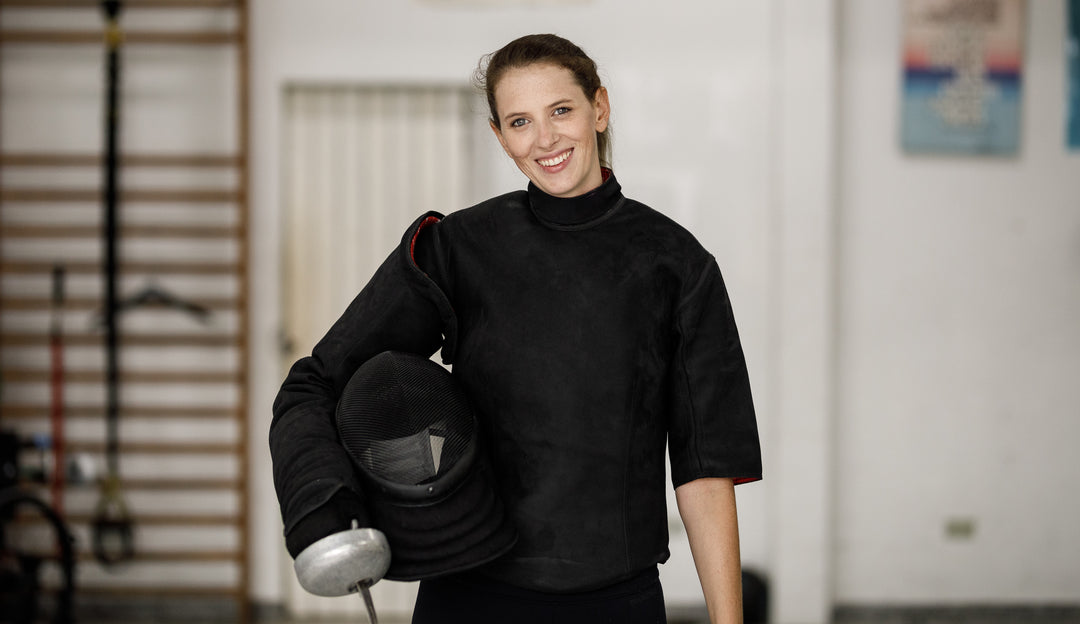
Understanding Your Protective Kit
Beginner gear supplied by clubs typically meets established safety standards designed to prevent puncture injuries during training.
- Mask: Protects your face, head, and neck using a strong steel mesh.
- Jacket: Covers your torso and arms with puncture-resistant fabric.
- Plastron: Adds extra protection to the underarm and side.
- Glove: Protects your weapon hand and improves grip.
Deciding Between Foil, Épée, and Sabre
| Weapon | Target Area | Scoring Rules | Feel and Style |
|---|---|---|---|
| Foil | Torso only | Right-of-way applies | Technical and strategic |
| Épée | Entire body | No right-of-way, first touch wins | Patient and precise |
| Sabre | Waist up | Right-of-way applies | Fast and aggressive |
Choosing a weapon is like choosing a character in a game. Try each one to find the style that suits you best.
Renting Versus Buying Your First Gear
Renting gear is ideal for your first lessons. Most clubs offer beginner packages that include everything you need. Once you decide to continue, buying your own gear improves comfort, fit, and consistency.
Learning the En Garde Stance and Footwork
Everything in fencing starts from the en garde stance—a balanced position that allows quick movement, strong defense, and efficient attacks.
Mastering the En Garde Stance
- Feet Placement: Front foot points at your opponent, back foot turned out at 90 degrees.
- Knee Bend: Knees bent evenly, weight centered for balance.
- Body Alignment: Torso upright, non-weapon arm raised for balance.
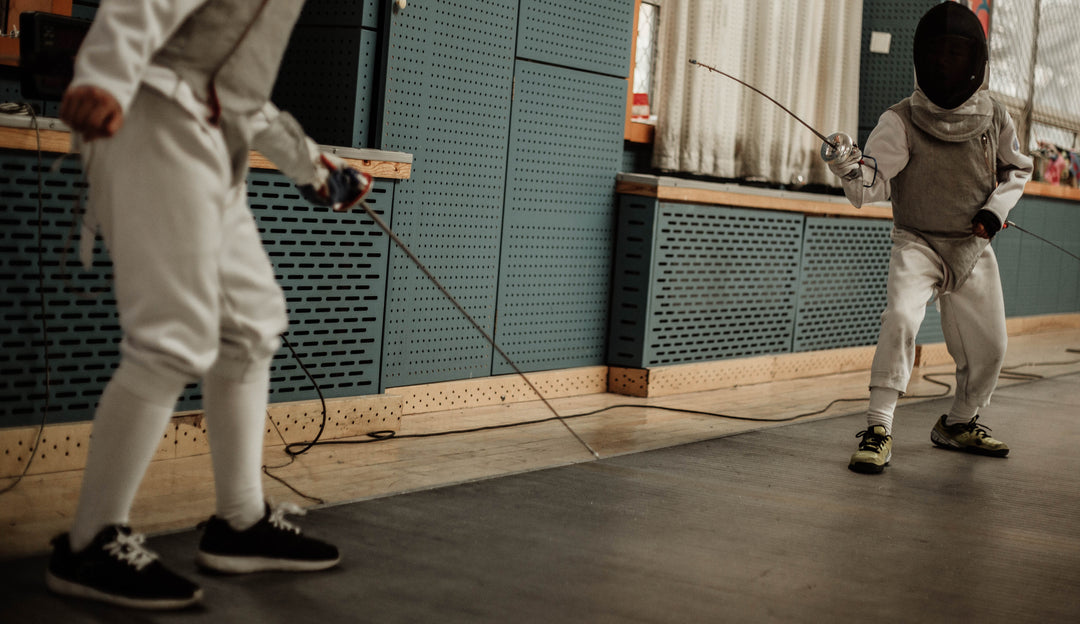
From this stance, footwork controls distance and timing.
The Language of Fencing Footwork
- The Advance: Step forward while maintaining stance.
- The Retreat: Step backward to manage distance.
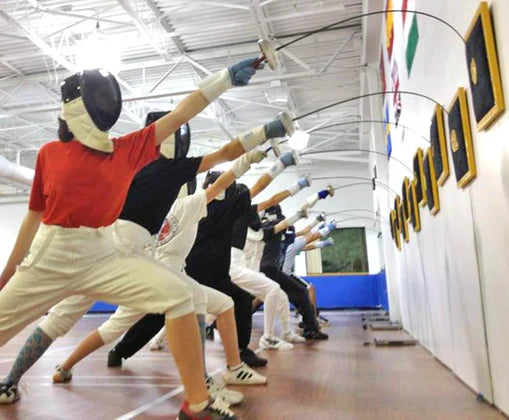
- The Lunge: Extend the front leg and arm to attack.
Staying low and balanced helps you move efficiently and avoid telegraphing your intentions.
Understanding Basic Attacks and Defenses
As your footwork improves, you will add blade actions. The attack, parry, and riposte form the foundation of fencing exchanges.
The Simple Attack
Extend your arm toward the target before lunging. In foil and sabre, this sequence establishes right-of-way and improves accuracy.
The Parry
A parry is a small movement that deflects an opponent’s blade. Beginners commonly learn parries like four and six to protect key target areas.
A successful parry creates an opening to score.
The Riposte
The riposte is your immediate counter-attack after a parry, turning defense into offense in one smooth motion.
How to Find the Right Fencing Club for You
The right club makes a major difference in how quickly and comfortably you progress. A good beginner club prioritizes structure, safety, and positive coaching.
What Makes a Great Beginner Fencing Club
- Qualified Coaches: Experience teaching beginners and building fundamentals.
- Structured Programs: Clear progression from basics to sparring.
- Safety Standards: Proper gear usage and rule enforcement.
- Welcoming Culture: An environment that encourages learning.
Well-run clubs emphasize correct fundamentals early, helping beginners avoid bad habits and reduce injury risk.
Group Classes Versus Private Lessons
Group classes provide a social, affordable way to learn fundamentals. Private lessons offer personalized feedback and faster technical improvement. Many fencers combine both.
Watching or trying a class before enrolling is one of the best ways to assess a club.
Smart Questions to Ask Before You Join
- What is the cost and schedule of the beginner program?
- Is gear included or available for rent?
- How many students per coach?
- What comes after the beginner course?
- Are both recreational and competitive options available?
Common Questions About Starting Fencing
Q. Do I Need to Be in Great Shape to Start Fencing?
A. No. Fencing builds fitness gradually and welcomes beginners of all fitness levels.
Q. How Long Until I Am Good at Fencing?
A. Progress varies, but many beginners follow this timeline:
- 3–6 months: Solid fundamentals and beginner sparring.
- 1 year: Potential entry into local competitions with regular practice.
Q. Is Fencing an Expensive Sport to Start?
A. No. Rental gear keeps initial costs low, and you can invest in equipment gradually.
Q. What Is the Best Age to Learn Fencing?
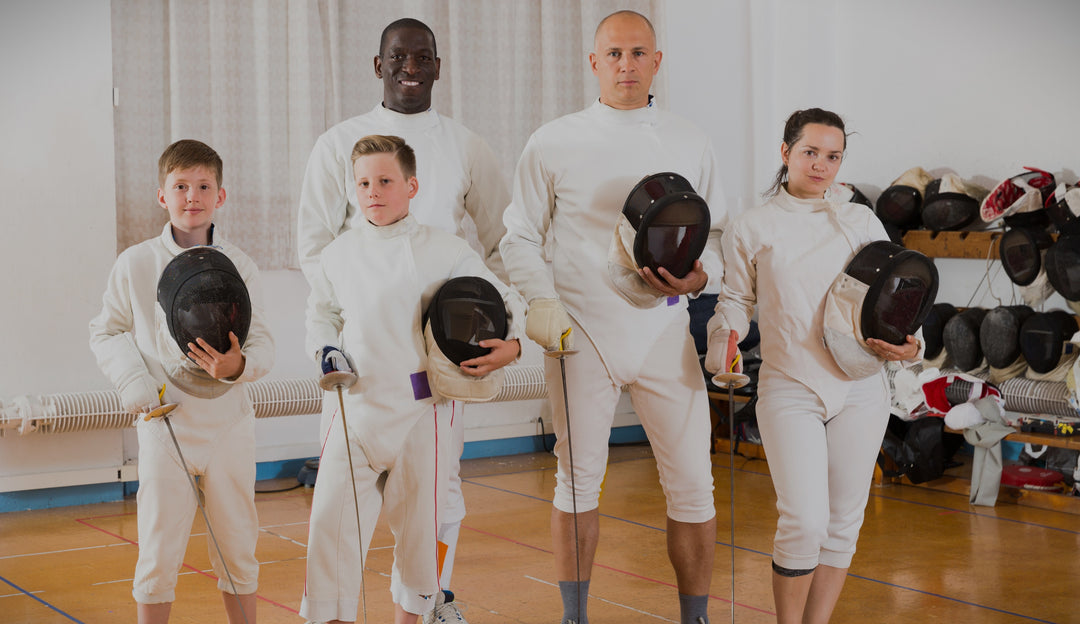
A. Any age. Children, teens, adults, and seniors all thrive in fencing.
Ready to start your fencing journey? At Fencing Club, we provide gear, guidance, and support for every level. Explore beginner-friendly equipment and resources at fencing.club.